If you’re planning to film Abraham’s story in Israel, you need to know something important: the Beersheba you’re looking for isn’t where you think it is.
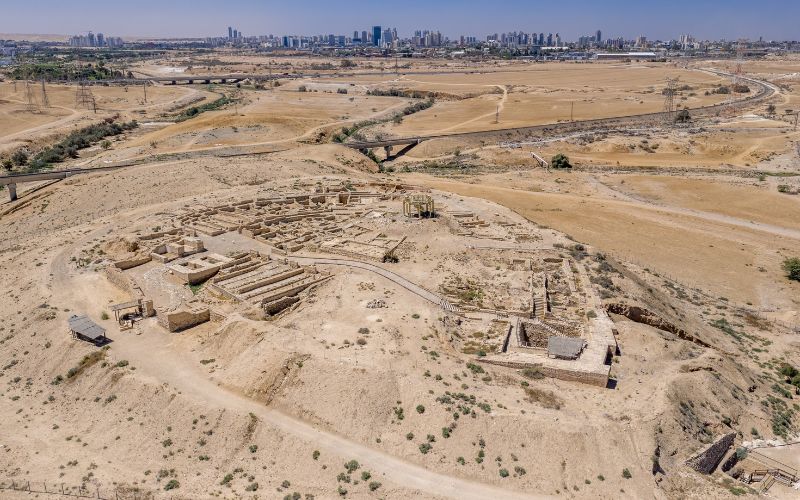
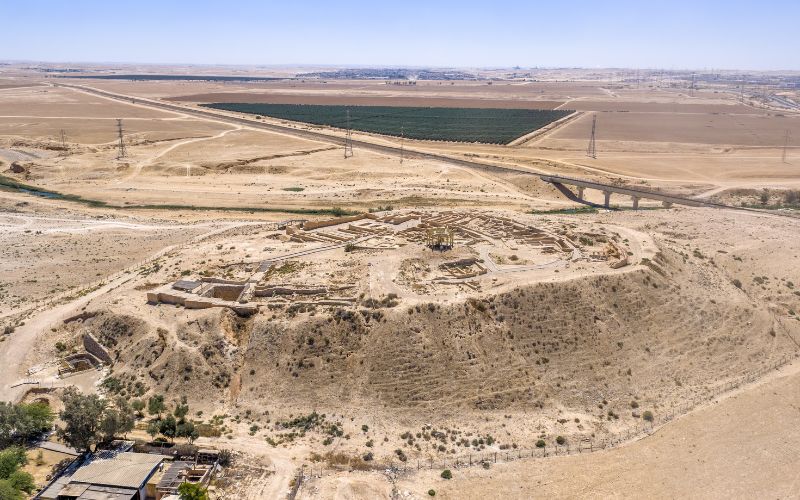
The modern city of Beer Sheva sits in Israel’s Negev region, bustling with universities and tech companies. But the archaeological site that connects to scripture, Tel Beer Sheva, lies 2.5 miles east of the city, preserved as a UNESCO World Heritage Site. What filmmakers find there is remarkable: one of the best-preserved examples of Iron Age urban planning in the ancient Near East. What they don’t find is Abraham’s well.
Understanding the Time Gap
When Genesis describes Abraham’s covenant with King Abimelech or Isaac digging wells, these events occurred around 2000-1500 BCE. The impressive ruins visible today date to the 9th-8th centuries BCE, roughly 1,000 years later, during the Kingdom of Judah.
Where was the original Beersheba? Archaeological evidence suggests it sits beneath the modern city, where ancient wells have been discovered. The tel represents the Israelite period, not the patriarchal era.
This matters for authenticity. Tel Beer Sheva provides desert atmosphere but not period accuracy for Abraham’s narratives.
What Makes Tel Beer Sheva Special
Despite the time gap, Tel Beer Sheva offers exceptional value for filmmakers working on filming locations in the Holy Land. UNESCO designated it a World Heritage Site in 2005 alongside Megiddo and Hazor.
Beersheba marked ancient Israel’s southern boundary, “from Dan to Beersheba” appears nine times in scripture. The Iron Age city was destroyed by fire in 701 BCE, preserving its layout remarkably well. You can trace grid-pattern streets, four-room houses, and the massive gate complex.
The 69-meter deep well is Israel’s deepest. An underground water system channeled floodwater into carved cisterns, enabling survival in desert conditions.
Location Highlights for Filmmakers
The tel rises 20 meters above the plain, offering commanding Negev views.
City Gate Complex: Where legal proceedings occurred-ideal for dialogue scenes.
Governor’s Palace: Administrative remains with ceremonial halls and living quarters.
Water Systems: Circular stairs descending to underground cisterns create dramatic compositions.
Street Grid: Visible urban planning with separate residential, administrative, and storage zones.
Desert Setting: The margin between cultivation and wilderness that defined Beersheba’s strategic role.
An observation platform provides aerial perspectives of the oval city plan without requiring aircraft.
Filming Practicalities
Tel Beer Sheva operates as a national park. Professional filming requires permits from the Israel Nature and Parks Authority, expect 7-10 days processing when filming in the Holy Land.
Applications need a production statement, crew list, and $2 million insurance coverage. Budget $90/day for location fees.
Drone filming requires an Israeli licensed operator, you cannot use foreign equipment without authorization. Heritage sites have additional restrictions. Working with Biblical Productions helps navigate these regulations.
Spring and fall offer comfortable filming conditions. Summer exceeds 35°C (95°F); winter brings mild temperatures with occasional rain.
Equipment placement is strictly controlled to protect archaeological remains. The site has maintained pathways and a visitor center.
Making It Work for Your Story
The visible remains suit Kingdom of Judah narratives (9th-8th centuries BCE), the divided monarchy, prophets like Amos, and centralized state administration.
For patriarchal stories, the location offers desert atmosphere but not architectural accuracy. Creative framing can use the landscape while limiting shots of Iron Age structures.
Tel Beer Sheva combines well with other Negev locations. The nearby desert can represent Abraham’s wanderings, while the tel itself shows later periods when Beersheba was a fortified center.
The site’s strength: complete city planning, water engineering, and the stark beauty of Israel’s southern frontier.
Frequently Asked Questions
Is this where Abraham dug his well?
The archaeological remains visible today date from roughly 1,000 years after Abraham’s time. The patriarch’s wells likely lie beneath the modern city of Beer Sheva, in the valley where ancient water sources have been found.
Can I film at Tel Beer Sheva?
Yes, with proper permits from the Israel Nature and Parks Authority. Applications typically require 7-10 days processing, and you’ll need production documentation and insurance coverage.
What about drone filming?
Commercial drone operations in Israel require working with an Israeli licensed operator. You cannot use foreign equipment without proper authorization, and heritage sites have additional restrictions.
Which biblical stories match this location historically?
The visible city represents the Kingdom of Judah period (9th-8th centuries BCE). It’s appropriate for stories from the divided monarchy era, not patriarchal narratives.
How do I arrange filming permits and logistics?
Working with experienced local production services helps navigate the permit process, identify which approvals you need, and coordinate with the relevant authorities efficiently.